A customer asks about a delayed order on Instagram. No reply, so they try WhatsApp. Then they send an email with the subject line "THIRD TIME ASKING". Three people on your team see three different messages, and none of them knows about the other two.
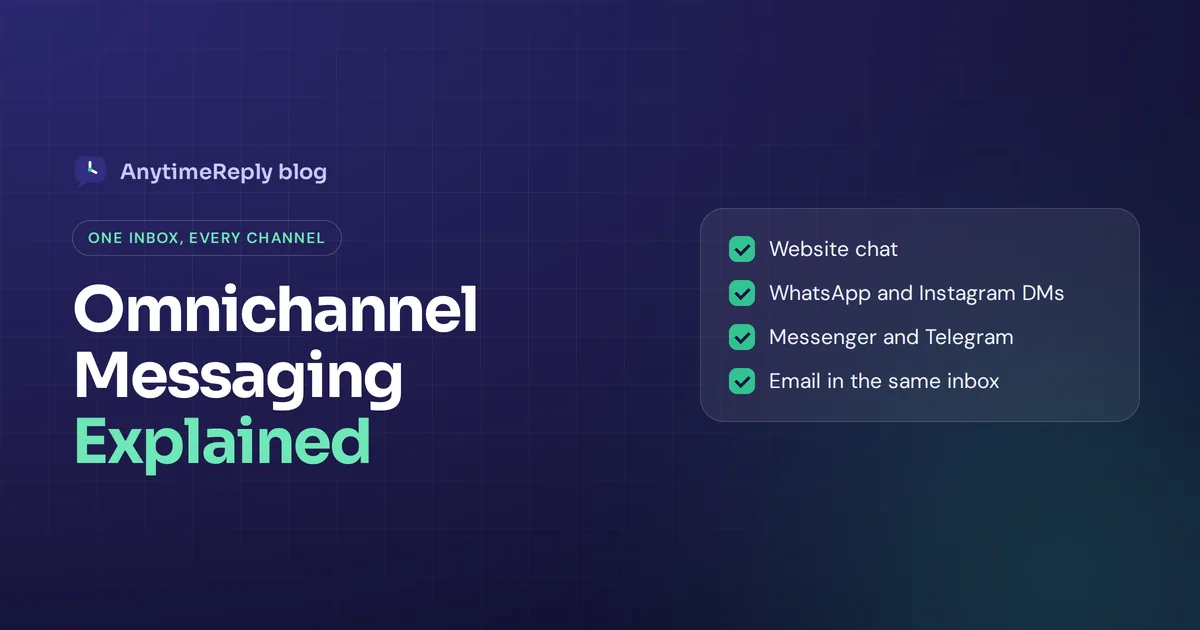
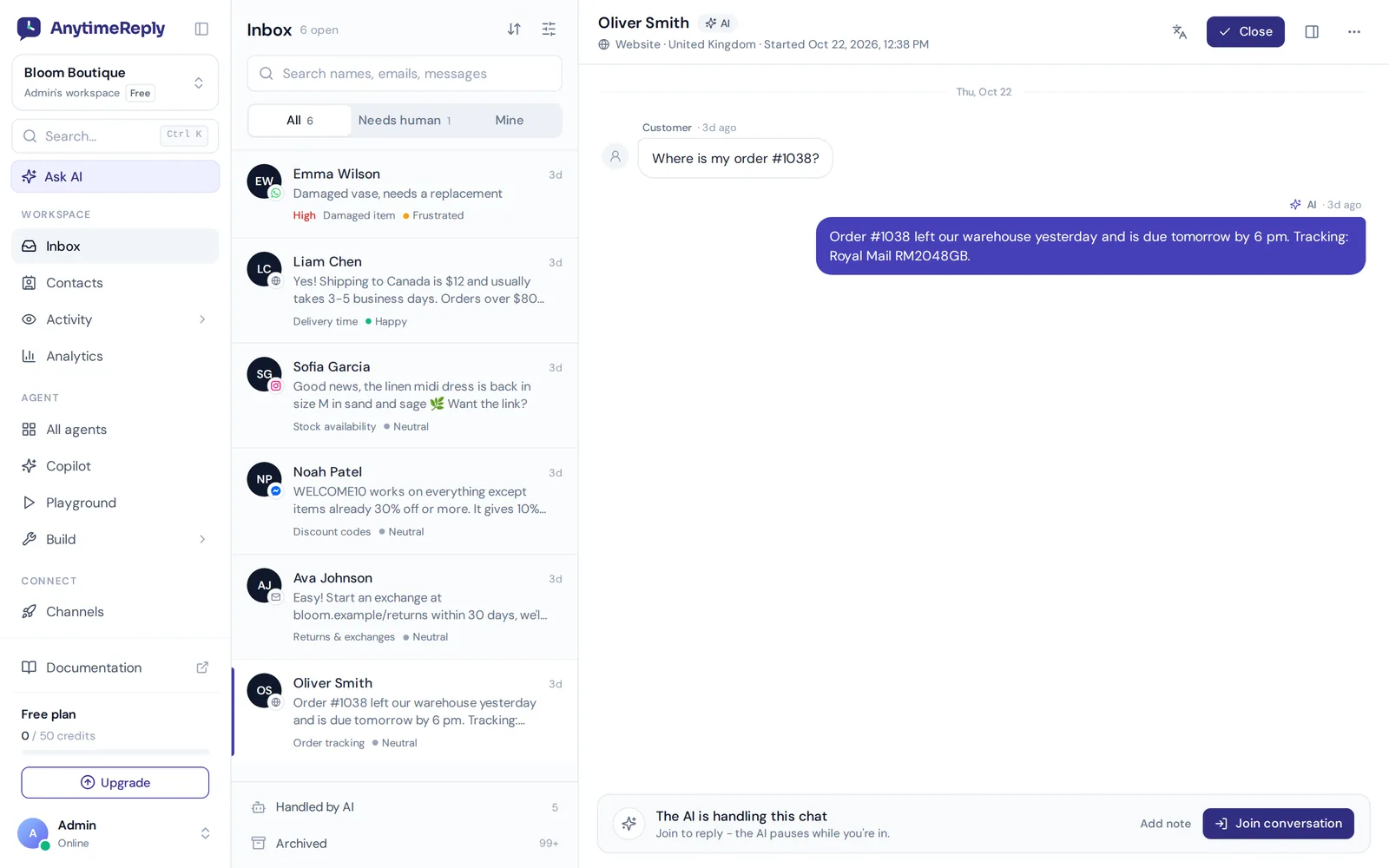
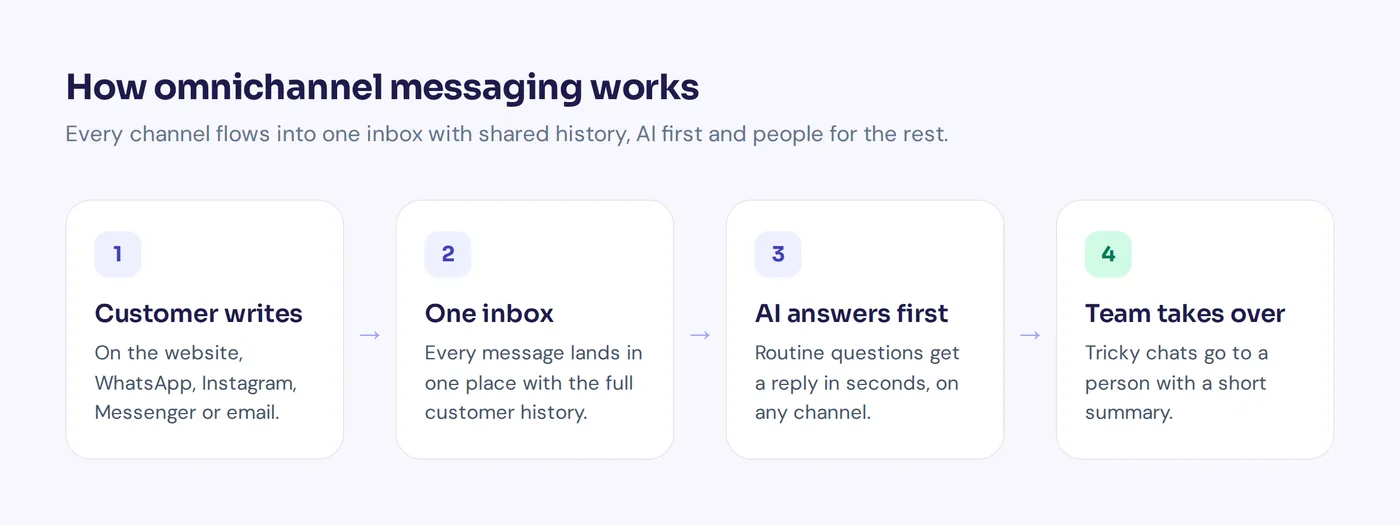
Omnichannel messaging fixes this. It connects the places customers message you (website chat, WhatsApp, Instagram, Messenger, email, SMS and more) so every conversation lands in one view with the full conversation history. The customer can switch channels and never has to repeat themselves.
In this guide we explain what it is, how it differs from multichannel, which channels matter, how to pick the right platform and how to set it up step by step. We build a shared inbox with an AI agent, so we have an opinion, but the guide is useful whatever tool you choose.
What is omnichannel messaging?
It means talking to customers across multiple channels while keeping one connected conversation. The customer's profile, past messages and open issues follow them from one channel to the next.
In practice, an omnichannel approach has three parts:
- Many communication channels. Customers reach you wherever they prefer: your website, WhatsApp, social media DMs, email or text messaging.
- One platform to reply from. Your team answers everything from a single omnichannel inbox instead of ten browser tabs and two phones.
- Shared context. Every agent (and any AI assistant) sees who the customer is and what happened before.
The goal is a consistent customer experience. Same answers, same tone, same history, no matter where the message came from. You'll also hear it called unified messaging or omnichannel communication. They mean roughly the same thing.
The difference between multichannel and omnichannel messaging
These two terms get mixed up all the time. Multichannel messaging means you're present on many channels. Omnichannel means those channels are connected.
| Multichannel | Omnichannel | |
|---|---|---|
| Channels | Several, each run with separate tools | Several, all connected |
| Where your team replies | Each channel's own app | One shared inbox |
| Customer history | Split by channel | One timeline |
| Customer repeats themselves? | Often | Rarely |
| Reporting | Per channel, hard to compare | One view of every customer interaction |
| Automation | Set up again on each channel | One set of rules and one AI |
Most businesses become multichannel without planning it. You open an Instagram account, add a WhatsApp number, put a chat widget on the site. True omnichannel is what happens when you finally bring them together.
What is a messaging channel? WhatsApp, SMS, chat and more
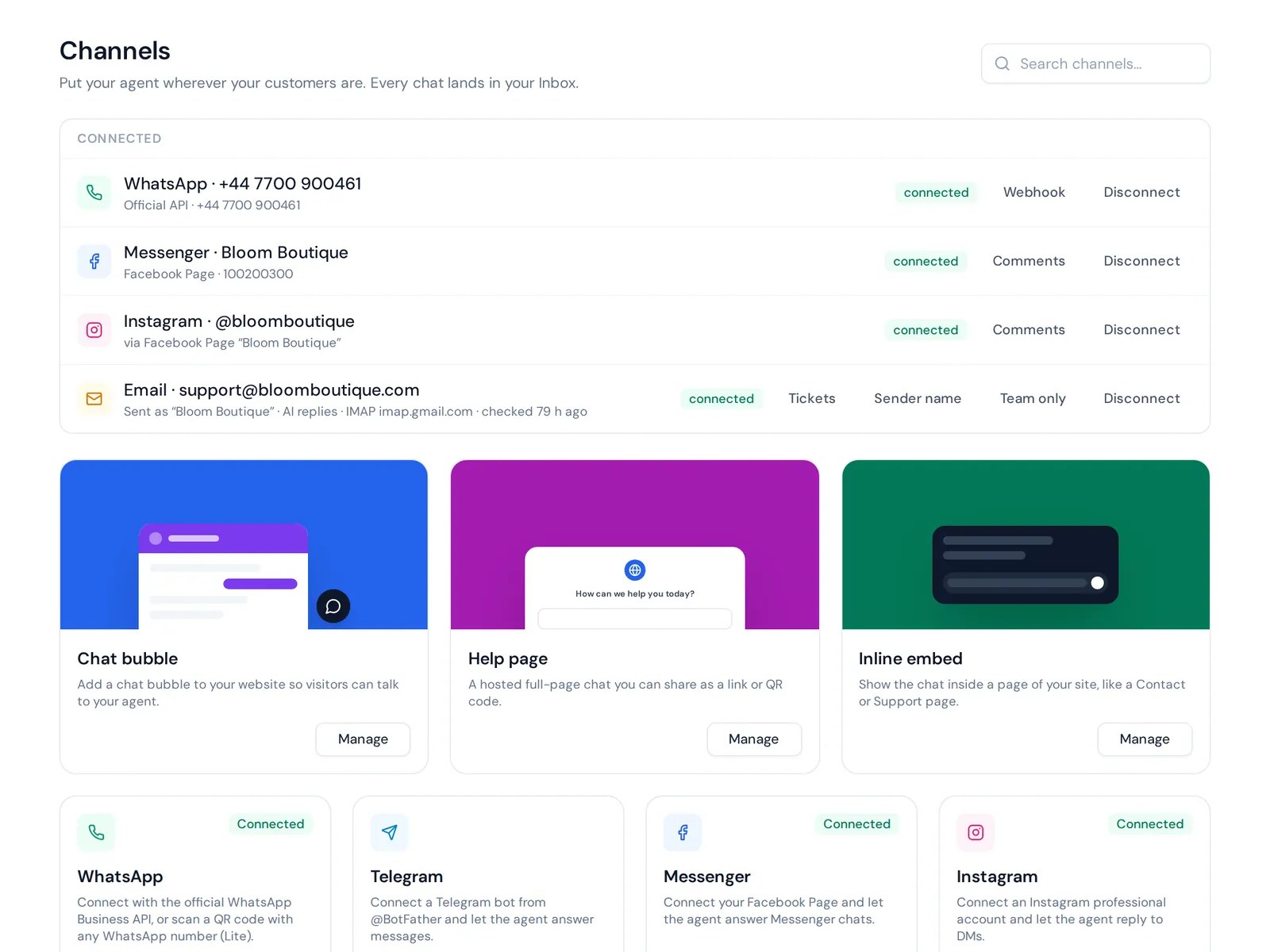
A messaging channel (or customer communication channel) is any place a customer can send you a message and get a reply. You don't need all of them, only the ones your customers use:
- Website live chat: catches visitors while they're deciding. Great for pre-sales questions and support. This is classic omnichannel chat territory.
- WhatsApp: the default messaging app in many countries. Businesses connect through the WhatsApp Business API or the WhatsApp Business app.
- Facebook Messenger and Instagram DMs: where social sellers and younger audiences start conversations, often from a post or comment.
- Email: still the home of longer issues, attachments and invoices.
- SMS and RCS: SMS messaging works for alerts, reminders and order updates, especially where people don't use chat apps. RCS adds richer features to standard texting.
- Telegram, Viber, LINE: big in certain regions.
- In-app messaging: for software products and mobile apps.
- Slack or Discord: useful for B2B communities and internal help desks.
A practical rule: start with two or three channels where you already get messages, connect them properly, then add more as your business needs grow.
Benefits of omnichannel for customers and your team
- Customers don't repeat themselves. The agent sees yesterday's Instagram message when the same person writes on WhatsApp today.
- Faster replies. One inbox means no channel and no message gets forgotten at the end of the day.
- Consistent answers. The same knowledge base and the same AI answer wherever the customer writes.
- A calmer team. Assignment, notes and statuses work the same across channels.
- Better customer data. You see what customers ask across all channels, not just one channel.
- More sales and loyalty. Quick answers on the channel the customer chose often turn questions into orders, and people come back to businesses that remember them.
That's the business case for omnichannel in short: consistent messaging across channels, less chaos inside and a smoother omnichannel experience outside.
Customer service vs marketing: two sides of omnichannel
The same idea shows up in two places, and it helps to know which one you're shopping for:
- Omnichannel customer service (or omnichannel support) is about answering. Customers start the conversation, your team or AI replies, and history follows them.
- Omnichannel marketing is about reaching out. Messaging campaigns go out by email, SMS, WhatsApp or push notifications based on behavior and messaging preferences, and personalized messaging adapts to each segment.
A good marketing plan coordinates those campaigns so a customer doesn't get the same offer on four channels. Many businesses need both, but they're often handled by different tools.
Common challenges and how to handle them
Recognizing the same customer
An Instagram handle, a phone number and an email address may all belong to one person. Good platforms unify contacts when details match, and let agents merge them by hand.
Different rules per channel
WhatsApp has messaging windows and template approval for outbound messages. Instagram and Messenger have their own policies. Your platform should handle these, but your team should know the basics. Meta's WhatsApp Business Platform docs are the official reference.
Response time expectations
People expect a chat reply in minutes and accept an email reply in hours. Set targets per channel and use AI to cover nights and weekends.
Too many channels, too few people
More channels bring more messages. Without automation, a small team drowns. That's why most omnichannel setups today include an AI agent that answers routine questions first.
How to choose the right omnichannel messaging platform
An omnichannel messaging platform (sometimes called an omnichannel communication platform, or just an omnichannel platform) connects your channels into one system. Compare omnichannel capabilities, not just the number of logos on the pricing page. Look for:
- Channel coverage: native connections for the channels you need, without extra connectors.
- A unified inbox with filters, views and assignment.
- Customer profiles with contact details, conversation history and custom attributes.
- AI and automation: an AI agent that answers from your content, plus rules for tags, priority and handoff.
- Human handoff with a summary, so customers never start over.
- Outbound tools that respect opt-outs.
- Analytics by channel, topic and satisfaction.
- Integrations with your store, CRM and calendar, so you can personalize replies.
Types of omnichannel messaging solutions
"Omnichannel messaging solution" can mean very different products:
| Type | What it does | Examples | Best for |
|---|---|---|---|
| Messaging APIs (CPaaS) | APIs to send and receive SMS, WhatsApp, RCS and more from your own software | Twilio, Infobip, Sinch, Vonage | Companies with developers |
| Customer service suites | Ticketing, live chat and messaging in one large system | Zendesk, Intercom, Freshdesk | Mid-size and large support teams |
| Marketing automation tools | Campaigns across email, push, SMS and more | Braze, Klaviyo, ManyChat | Marketing teams |
| AI agent plus shared inbox | AI answers on all channels, team handles the rest in one inbox | AnytimeReply and similar tools | Small and growing businesses |
Many businesses combine two types, for example a messaging API for order notifications and a shared inbox with AI for customer communication. Either way, business messaging works best when every message lands somewhere your team can see it.
Omnichannel customer service examples
An online shop
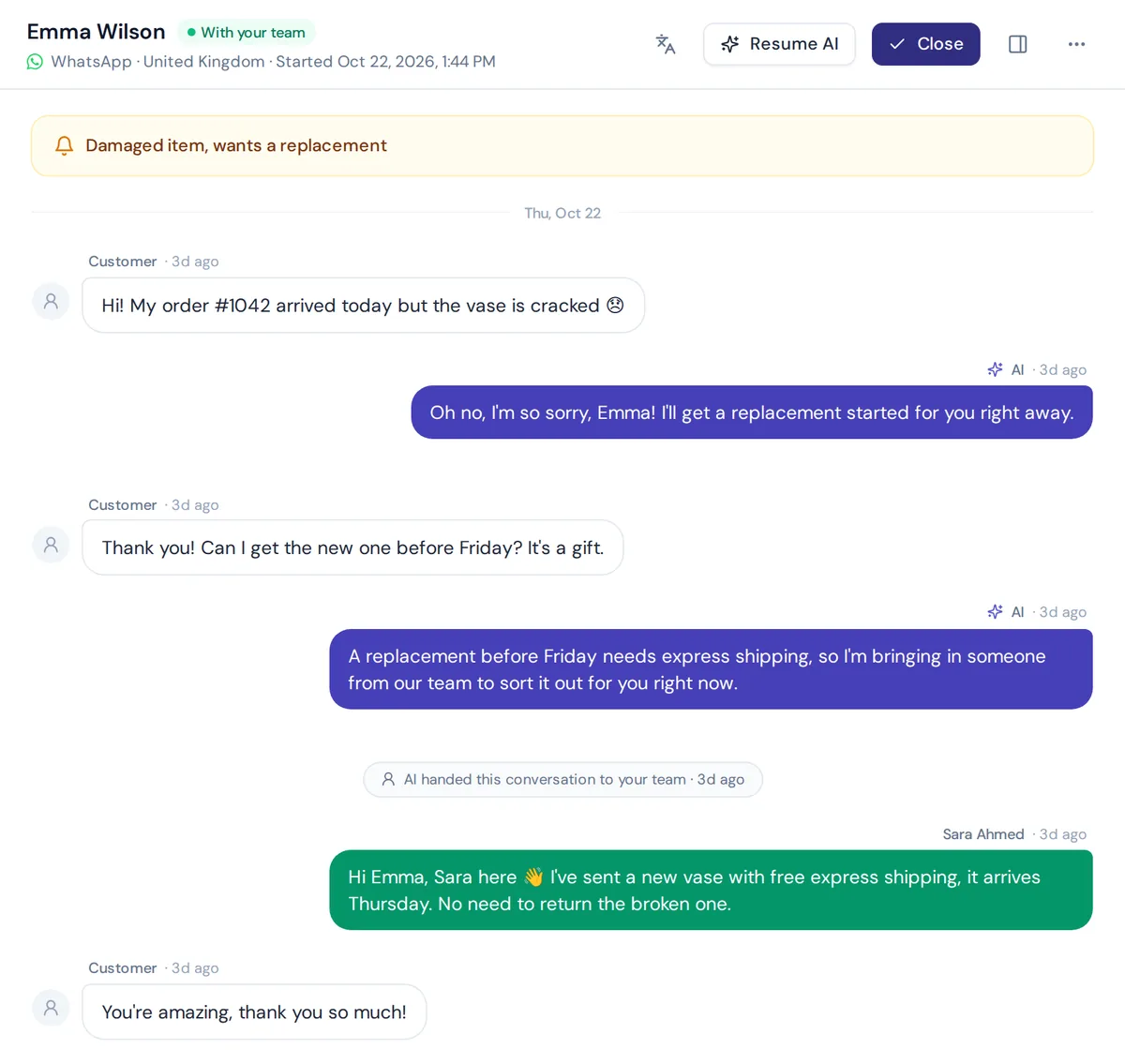
A shopper asks on Instagram if a jacket comes in medium. The AI answers with stock from the store. Two days later the same shopper writes on WhatsApp: "Where's my order?" The AI checks the order and replies. When the parcel arrives damaged, the AI hands the chat to a person, who sees the whole history and sends a replacement.
A software company
A trial user asks a setup question in website chat at midnight and gets an answer from the docs. The next week they email about an invoice. The billing agent sees the earlier chat and knows the account is new.
Is Amazon an omnichannel business?
It's a common example. Amazon connects its website, app, email, notifications and physical stores around one account, so your cart, orders and support history follow you. You don't need Amazon's budget to copy the core idea: one customer, one history, any channel.
How to build a messaging strategy that fits your business needs
- Audit your channels. List where messages come in today and roughly how many per week.
- Pick your core channels. Choose the two to four that bring the most conversations.
- Choose a platform that connects those channels natively into one inbox.
- Build one knowledge base. Policies, FAQs, product info and pricing in one place.
- Add an AI agent trained on that knowledge to handle routine questions.
- Set handoff rules. Angry customers, refunds and "talk to a human" go to your team.
- Set routing and targets per topic and per channel.
- Write a short tone guide. A bit more formal on email, a bit lighter on Instagram.
- Review weekly. Check unanswered questions, slow channels and customer satisfaction ratings, then improve.
This fits inside your wider customer service strategy and communication strategies, and it's the core of any omnichannel setup. Keep it simple at first. A working setup on three channels beats a messy one on eight.
How AnytimeReply brings WhatsApp, Instagram, chat and email into one inbox
AnytimeReply gives you one shared inbox for website chat, WhatsApp, Messenger, Instagram, Telegram, email and Slack. An AI agent trained on your website and documents answers first, in the customer's language, and hands the conversation to your team with a summary when a person is needed.
- One inbox with departments, assignment (least busy or round robin), internal notes, @mentions and views like Unassigned and Needs human. See the helpdesk and live chat page.
- Triggers to set priority, tag, assign or notify Slack when a rule matches.
- Contacts that bring together visitors, leads, WhatsApp and email customers.
- Outbound: WhatsApp broadcasts with opt-out, proactive website messages and replies to Facebook and Instagram comments.
- Analytics for topics, sentiment, channels and unanswered questions.
Honest limits: AnytimeReply has no SMS, phone or voice channel, and it isn't a marketing automation suite for complex campaigns. If texts or calls are central for you, you'll need another tool for those. Website chat and the inbox are on the Free plan, and the messaging channels start on Hobby. Check pricing.
Frequently asked questions
What does omnichannel mean in simple words?
Handling every customer message from many channels as one connected conversation, usually in a single inbox with shared history.
What is another word for omnichannel?
People often say unified, connected or cross-channel. In support, you'll also see "unified inbox" or "omnichannel engagement".
What is an omnichannel marketing strategy?
A plan that coordinates marketing across channels like email, SMS, social and your website, so each customer gets a consistent, well-timed message instead of repeats.
Do small businesses need an omnichannel strategy?
Often more than big ones. A small team can't watch five apps all day. One inbox plus an AI agent covers a lot.
Which channels should I start with?
The ones where customers already write to you. For many online shops that's website chat, WhatsApp and Instagram. For B2B it's often website chat and email.
Bring your channels into one place
Omnichannel isn't about being everywhere. It's about being connected wherever you are, so customers get quick, consistent answers and your team stops juggling apps.
If you want to try one inbox with an AI agent that answers first, you can start free, no card needed.
Published 30 October 2026 by AnytimeReply team