A customer walks into your shop, can't find anyone to ask about a size, and leaves. Another messages your Instagram page at 10 pm asking if a jacket is back in stock, and hears nothing until the next afternoon. Neither of them complains. They just buy somewhere else next time.
That is why knowing how to improve customer service in retail matters so much. Good customer service is often the one thing a small or mid-size retail business can do better than a giant chain. This guide gives you practical customer service tips to help you on the shop floor and the web, the tools that actually help, and the numbers worth tracking.
What a good customer experience looks like in retail today
Retail customer service is every interaction a shopper has with your store before, during and after they buy: in the shop, on your website, on social media, on WhatsApp, by email and on the phone.
Shoppers don't separate these the way stores do. To them it's one brand and one overall customer experience. In modern retail, good retail customer service usually means:
- Fast, easy answers to simple questions (stock, sizes, delivery, returns).
- Friendly, knowledgeable retail staff who can actually help, not just point to an aisle.
- The same high-quality service across channels, so price and policy match in store and on the web.
- Problems fixed without a fight. A return or a damaged item handled quickly and fairly.
- Feeling remembered. Staff or systems that know who the customer is and what they bought.
Why good customer service is essential in retail
Retail isn't just about products anymore. In today's retail world, products are easy to copy and prices are easy to compare. Service is harder to copy, and great service builds a brand people return to. Customer service is essential because it drives:
- Customer loyalty and repeat business. A happy customer comes back without you paying for another ad. That's customer retention, and it's cheaper than finding new buyers.
- Customer trust and reviews. One great return experience can turn into a five-star review. Poor customer service can turn into a public complaint.
- A bigger basket. A helpful staff member who suggests the matching belt or the right care product adds real value, and real revenue.
- Fewer returns. Good advice before the sale ("this runs small, take one size up") stops returns before they happen.
Put simply, great customer service can turn a one-time shopper into a regular, and good service may be the reason they pick you over a cheaper shop. When you turn customer problems into wins, people talk about it. And in a competitive retail market, that's the whole game.
How to improve customer service in retail: 12 practical tips
These tips will help you improve your customer service whether you run a single retail store, a chain or a web-only shop. Pick the two or three that fix your biggest pain first.
1. Hire for attitude, then train for skills
You can teach someone your returns policy in an hour. Teaching them to genuinely care takes much longer. When hiring for the shop floor or your customer service department, look for patience, warmth and curiosity. Then invest in solid training.
2. Invest in customer service training (and product training)
Customers ask "What's the difference between these two?" far more than "Where are the tills?". Good customer service training covers both people skills and products: what each product or service is good for, how it fits, what people often ask. Short weekly sessions work better than one long onboarding day, and they build real customer service skills over time.
3. Give employees the power to fix problems
Nothing causes customer frustration like "I'll have to ask my manager" for a small issue. Set clear limits (for example, staff can approve refunds or goodwill gestures up to a set amount) and let them act. Customers notice when the person in front of them can actually help, and it improves the customer service experience on both sides of the counter.
4. Make returns and exchanges painless
A return is a test of your service. Write a simple, clear policy, put it on your website and receipts, and train everyone to follow it the same way. Offering an exchange or store credit politely is a simple way to keep the customer and the sale.
5. Be available where customers already are
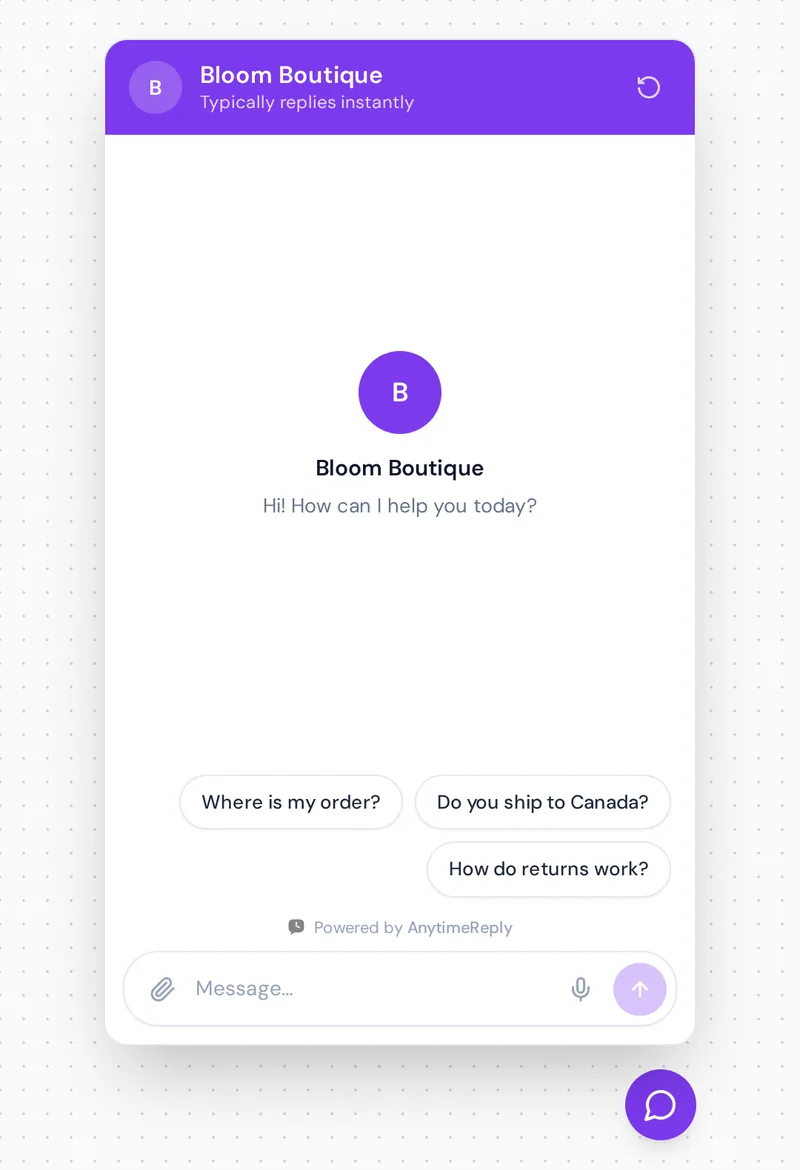
Many shoppers would rather send a message than call or visit. Add live chat to your website and answer on WhatsApp, Instagram and Facebook Messenger. A customer who gets a quick "Yes, we have it in medium" is much more likely to come in or order.
6. Answer fast, even outside opening hours
Your shop closes at 8 pm. Your customers keep shopping on their phones. An AI chatbot can handle common questions (stock, delivery, returns, opening times) at any hour and pass anything tricky to your team the next morning. Fast responses to customer questions are one of the simplest ways to improve customer satisfaction.
7. Personalize with customer data
Use what you know. A loyalty program or customer relationship management (CRM) system lets staff greet regulars, remember their sizes and suggest things they'll actually like. Customer data and purchase history help you understand customer preferences and meet customer needs without asking for the order number three times.
8. Keep information consistent across every channel
If your website says 30-day returns and the shop says 14, you have a problem. Keep one source of truth for prices, policies and product details, and make sure staff, the website and any chatbot all use it. This consistency sets the standard for customer trust.
9. Reduce waiting in store
Long queues are one of the most common complaints in physical retail. Open extra tills at busy times, use mobile checkout, accept the payment methods people actually use (cards, mobile wallets), offer click-and-collect points and match staff schedules to peak hours.
10. Collect customer feedback and act on it
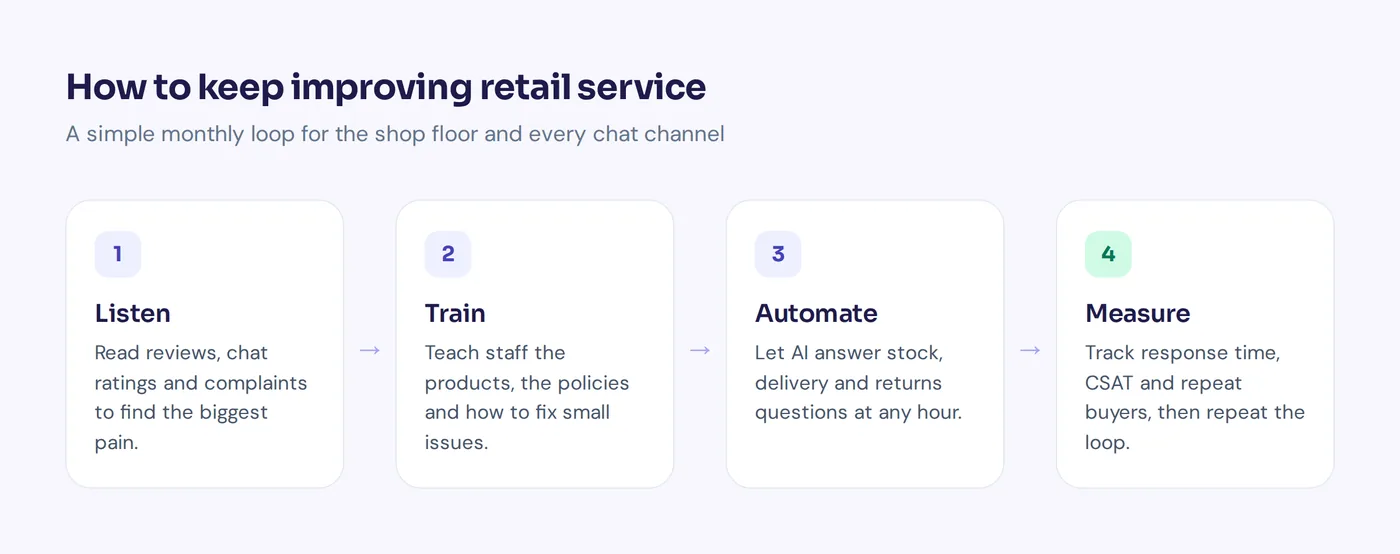
Send a short survey after purchase, ask for a rating after each chat, and read your reviews. Treat customer complaints and feedback as free consulting. Then actually change something. Customers forgive a lot when they see you listened.
11. Handle complaints like a chance, not a threat
Listen without interrupting, say sorry for the experience, fix it, and follow up. A customer may end up more loyal after a problem solved well than one who never had a problem at all.
12. Measure and review every month
Pick a few customer service metrics (see below), look at them monthly with your team, and celebrate improvements. What gets measured gets better, and it keeps your customer service efforts focused.
How to improve online customer service and customer engagement
For many retailers, the website and social media now get more questions than the shop counter. Digital service has its own rules.
- Put answers where people look. A clear shipping and returns page, size guides on product pages and a searchable help center save everyone time.
- Reply on social media too. Comments like "price?" and "do you have this in black?" are sales questions. Answer them quickly, publicly or by DM. That's customer engagement that sells.
- Make order tracking self-service. "Where is my order?" is the most common question in ecommerce. Let customers check it themselves, or let a chatbot look it up.
- Write like a human. Short, friendly replies beat long corporate templates.
- Answer in the customer's language. If you sell across borders, replying in Spanish, Hindi or Bangla makes a big difference.
- Hand over to a person easily. Never trap people in a bot loop. "Talk to a person" should always work.
Technology to improve customer service
Tools won't fix a bad attitude, but the right ones make excellent service much easier to deliver in any retail environment, and they help every retail operation run smoother.
| Tool | What it helps with | Good for |
|---|---|---|
| AI chatbot | Instant answers about stock, delivery, returns, 24/7 | Web stores, social sellers |
| Live chat and shared inbox | All messages (website, WhatsApp, Instagram, email) in one place | Any retailer with more than one channel |
| Help center | Self-service answers customers can search | Stores with repeat questions |
| CRM and loyalty program | Remembering customers, personal offers | Shops with regulars |
| Mobile POS and self-checkout | Shorter queues, checkout anywhere in store | Busy physical stores |
| Inventory system | Accurate "is it in stock?" answers in store and on the web | Omnichannel retailers |
| Feedback and survey tools | Collecting ratings and reviews after purchase | Everyone |
Start with the tool that removes your biggest bottleneck. For most small retailers, that's a shared inbox with an AI chatbot, because messages pile up faster than anything else. Any approach to retail tech should make life easier for customer service agents, not harder.
Meeting and exceeding customer expectations for every customer
Customer expectations keep rising, and superior customer service is now the customer service game every shop is playing. People compare your store with the best experience they've had anywhere, not just with other shops. A few ways to stay ahead in a fast-paced retail market:
- Set clear promises and keep them. "Reply within 1 hour on chat" or "Free exchanges within 30 days" only works if you deliver every time.
- Enhance customer moments. Surprise people a little. A handwritten note in the parcel or a free alteration costs little and gets remembered.
- Make people feel welcome. Greet people in store, use names in chat, thank them for waiting.
- Remove small annoyances. Hidden fees, slow checkouts and confusing return forms hurt the shopping experience more than you think.
Customer feedback and metrics to track
- First response time: how long until a customer gets the first reply on chat, social or email.
- Resolution time: how long until the problem is actually solved.
- Customer satisfaction (CSAT): a quick rating after a chat or purchase.
- Net Promoter Score (NPS): how likely customers are to recommend you.
- Return rate and reasons: spotting products or descriptions that cause problems.
- Repeat purchase rate: the best long-term sign your service quality is working.
- Top questions: what customers ask most, so you can answer it better on your site.
Retail customer service examples you can copy
Simple scripts that help you provide good customer service in each customer interaction. Your customer service representatives (or your chatbot) can use them. Change the details to fit your store.
Stock question: "Good news, the linen shirt is in stock in medium. Would you like me to hold one for you until 6 pm, or send you the link to order?"
Late order: "I'm sorry your order is late. I've checked, and it's with the courier now and should arrive tomorrow. Here's your tracking link. If it doesn't arrive, message me and I'll sort it out."
Return request: "No problem at all. You can return it within our returns window for a full refund or exchange. Would you prefer to bring it to the shop or send it back by post?"
Damaged item: "That's really disappointing, sorry. Could you send a photo of the damage? We'll send a replacement right away, and you don't need to return the broken one."
After hours: "Thanks for your message! Our team is back at 9 am, but I can help with orders, delivery and returns right now. What do you need?"
Common mistakes that hurt service delivery
- Understaffing peak hours and then blaming staff for slow service.
- Different rules on the web and in store that confuse customers.
- Ignoring DMs and comments because "they're just social media".
- Bots with no way out. Automation should help customers, not block them from a person.
- Scripts that sound robotic. Give staff guidelines, not word-for-word lines.
- Asking for feedback and doing nothing with it.
How AnytimeReply helps retailers deliver service across channels
We built AnytimeReply to help shops provide exceptional customer service on the messages that pile up in retail: stock, sizes, delivery and returns. It handles the digital aspects of customer service, creating a smoother customer experience, so your team can focus on exceptional service in store.
- An AI agent trained on your store. Add your website, policies or Shopify products (with price and stock, shown as product cards). The AI agent answers in seconds, in the customer's language, day and night.
- One inbox for every channel. Website chat, WhatsApp, Instagram, Messenger and email land in one shared inbox. The AI hands over to your team with a summary when a customer asks for a person or gets upset.
- Order lookups. On paid plans the AI can check orders in Shopify or WooCommerce for verified customers.
- See what customers ask. Analytics show topics, sentiment and the questions the AI couldn't answer, so you can fix gaps quickly.
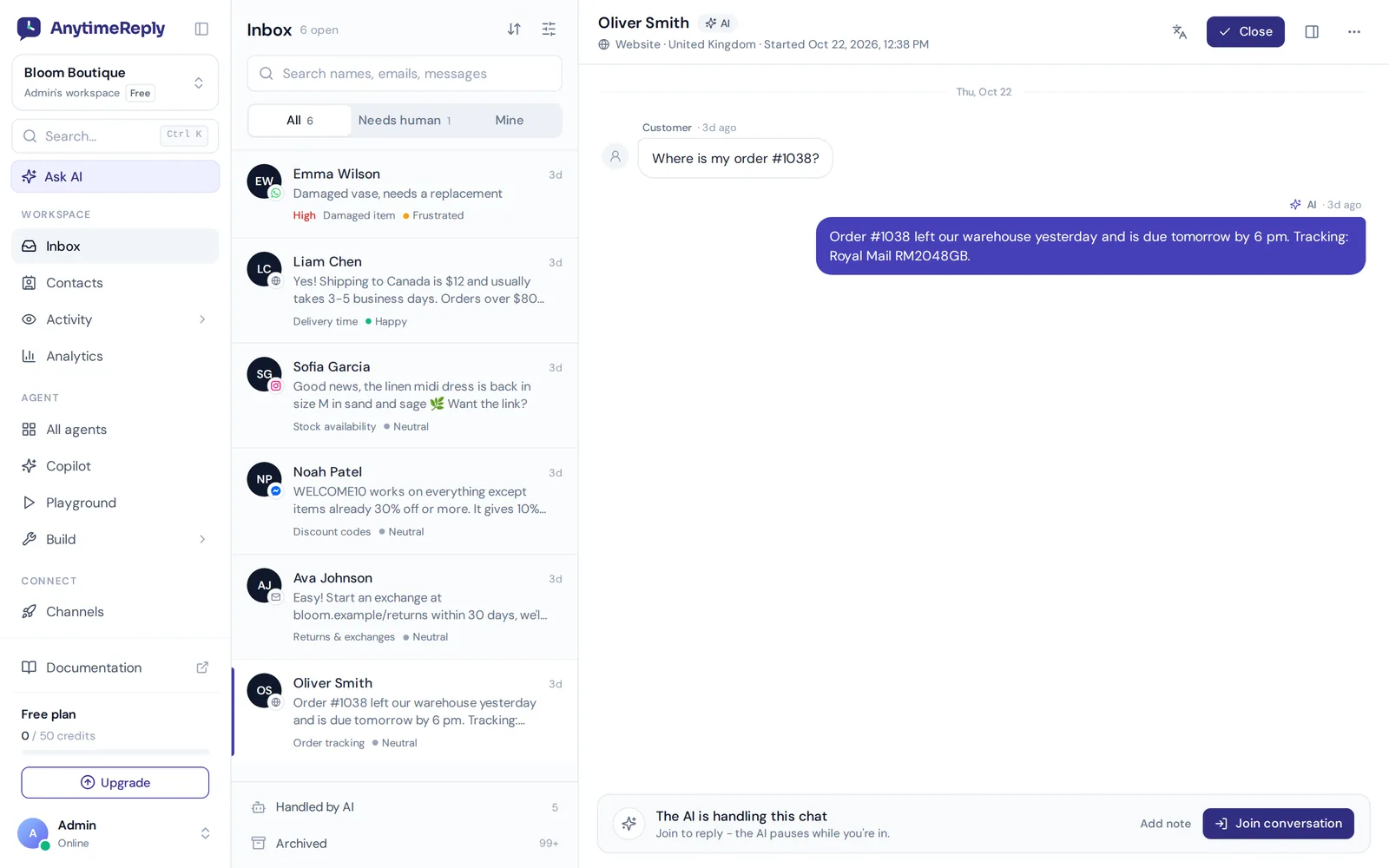
Honest limits: AnytimeReply is for text chat and email. It doesn't answer phone calls, and it won't replace good people on your shop floor. See how it works for online stores.
Frequently asked questions
What are some tips for improving retail customer service?
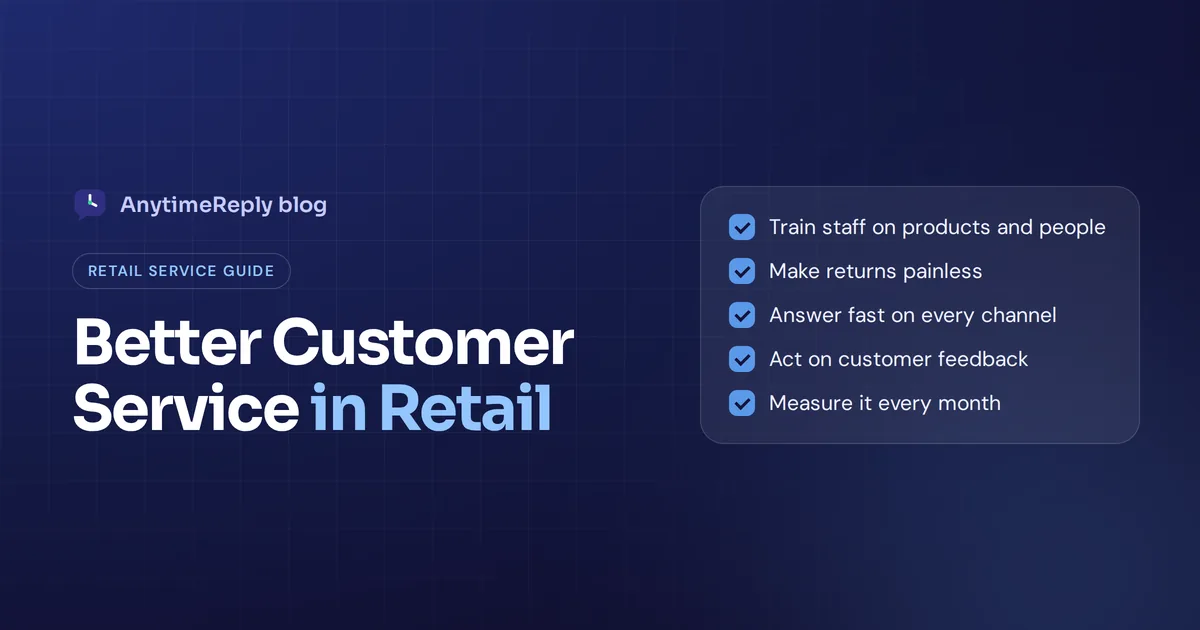
Train staff on products and people skills, give them power to fix small problems, make returns easy, answer messages fast on every channel, and act on customer feedback. Those five tips for providing excellent customer service cover most of the gains.
What are the 5 C's of customer service?
Lists vary, but a common version is courtesy, competence, consistency, communication and convenience. Together they describe a friendly, capable team that gives the same clear answers and is easy to reach.
What are 7 qualities of good customer service?
Speed, friendliness, product knowledge, patience, honesty, consistency and follow-through. If your team shows those seven every day, customers notice.
How can retailers use technology for better service?
AI chatbots answer common questions at any hour, a shared inbox stops messages getting lost, mobile checkout cuts queues, and a CRM helps staff remember customers. Use tools to remove waiting and repetition, not to replace people.
How do you measure retail customer service?
Track first response time, resolution time, satisfaction ratings, NPS, return reasons and repeat purchase rate. Review them monthly with your team.
Final thoughts
Excellent customer service in retail isn't one big project. It's dozens of small things done well: trained staff, fair returns, fast replies on every channel and a habit of listening. Start with your biggest pain point this month and fix it properly. Delivering exceptional customer care, again and again, is how successful retail brands are built.
If unanswered messages are that pain point, start free with AnytimeReply. Add your website, connect your chat and let the AI handle the repeat questions. No card needed.
Published 5 November 2026 by AnytimeReply team