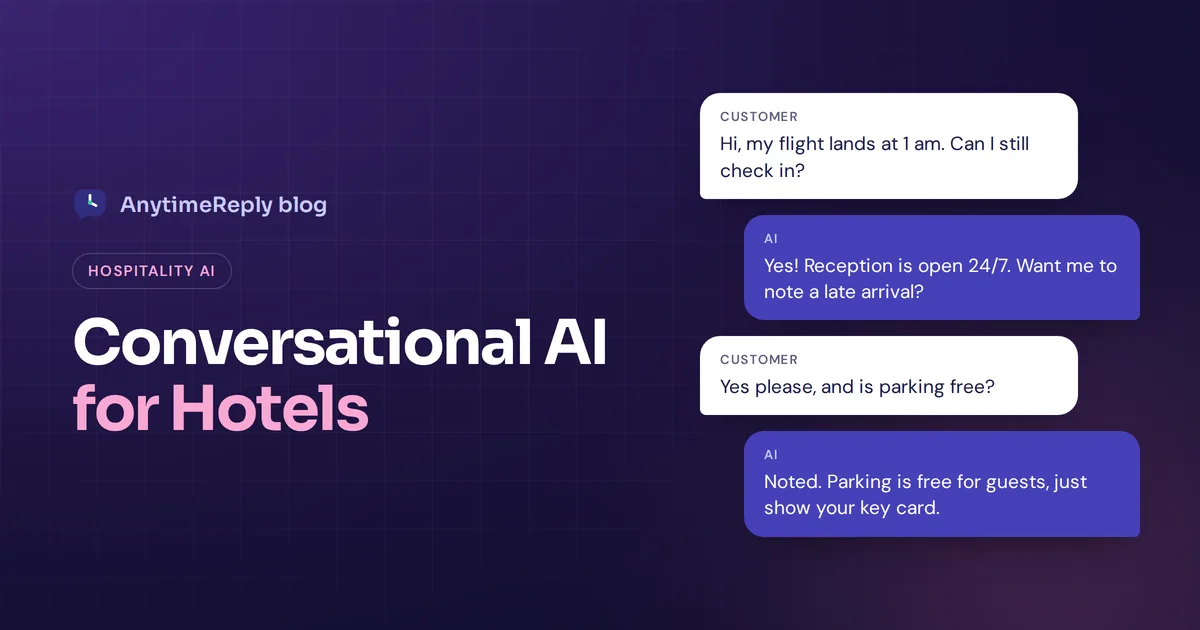
A guest lands at 1 am and sends your hotel a WhatsApp message: "Is the front desk open? Can I still check in?" Another guest wants to know if breakfast is included and whether you allow dogs. A third writes in Spanish. Your team is small, and right now they are asleep, busy or don't speak Spanish.
This is where conversational AI in hospitality earns its keep. An AI that understands natural language can answer hotel guests in seconds, in their own language, on the channels they already use, and pass the tricky requests to your staff. Done well, guests feel looked after. Done badly, it feels like shouting at a vending machine.
Below we explain what it is, the use cases that matter, how to set it up and where it falls short. We build an AI support tool, so we have a bias, but we'll be honest about the limits.
What is conversational AI in hospitality?
Conversational AI is artificial intelligence that understands what people say or type and replies in a natural, human way. It combines natural language processing, machine learning and, for voice tools, speech recognition.
In the hospitality industry, that means AI-powered chatbots and assistants that talk with guests on your hotel website, WhatsApp, Messenger, Instagram, email, in-room devices or the phone. They answer each inquiry, take requests and hand guests to a staff member when needed.
How is it different from a basic chatbot? Old bots made guests click through menus. A modern AI chatbot lets them type "do u have parking and is it free" and still get a clear answer. A newer AI agent can also take actions, like logging a request or checking a booking, which is where agentic AI is heading.
Why hospitality businesses use AI for guest communications
Hotels get the same questions every day: check-in time, parking, Wi-Fi, breakfast, airport transfers, cancellation policy. Front desk staff answer them on the phone, by email and on WhatsApp, often all at once. AI solutions help because they:
- Work 24/7. Guests travel across time zones. Questions come at 3 am too.
- Speak many languages. International guests get answers in their own language.
- Handle volume. In peak season, one AI replies to dozens of guests at the same time.
- Automate routine tasks. Your hotel teams can focus on more complex requests and on welcoming people in person.
- Catch direct bookings. A visitor with one quick question is more likely to book with you if someone replies right away, instead of going back to an online travel agency.
Big hotel chains like Hilton and IHG have invested in AI for guest service, but the tools are now cheap enough for a 20-room guesthouse, a restaurant or a tour operator. It is one of the more practical uses of AI in travel. A good bot helps streamline hotel operations: each guest query gets an instant reply, a booking confirmation question doesn't wait until morning, and customer satisfaction goes up when people stop waiting.
Hotel chatbot use cases across the guest journey
Before booking
- Answer questions about rooms, amenities, location, pets and the number of guests per room
- Explain cancellation and payment rules, then point to your booking engine for live rates
- Collect details for group stays, weddings and events
Before arriving at the hotel
- Answer pre-arrival questions: check-in times, directions, parking, transfers
- Take special requests (late check-in, a crib, extra pillows) and pass them to staff
- Offer upgrades or add-ons like breakfast or spa packages, which is easy upselling
During the stay
- Wi-Fi, restaurant hours, room service, pool and gym times
- Concierge-style tips: restaurants, transport, attractions
- Service requests for housekeeping and maintenance, routed to the right team in real-time
After checkout
- Lost and found, invoices and receipts
- Feedback requests and careful handling of complaints
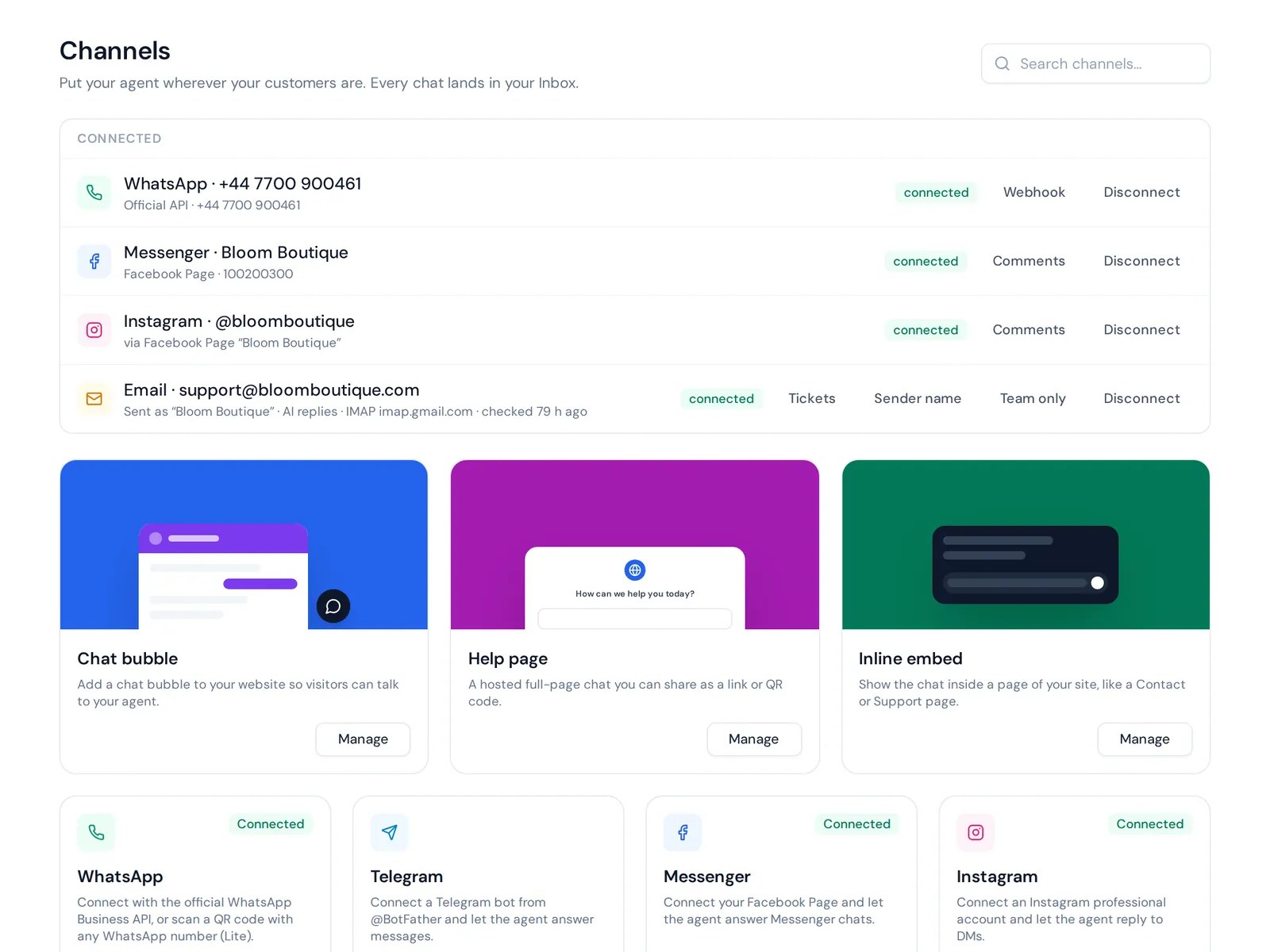
Where to use conversational AI across channels
Guests don't want to download your app. They want to message you where they already are.
| Channel | Best for | Watch out for |
|---|---|---|
| Pre-arrival chats, directions, requests during the stay | Use the official Business API and respect opt-outs | |
| Website chat | Questions during the booking process | Answers on prices and policies must be accurate |
| Instagram and Messenger | Boutique hotels and restaurants with active social pages | Comments and DMs pile up fast |
| Group bookings, invoices, longer requests | Slower, better as tickets | |
| Voice | Phone reservations and in-room devices | Needs a separate voice AI product |
For most small and mid-size hotels, WhatsApp plus website chat covers the bulk of guest interactions. Start there.
Implementing conversational AI: step by step
- List your top 30 guest questions. Ask the people at reception and check your inbox. Check-in, parking, breakfast, pets and cancellations will be near the top.
- Clean up your information. The AI repeats whatever you give it, so old info means wrong answers.
- Train it on your content. Add your website, room details, house rules and policies. Write exact answers for prices, deposits and cancellations.
- Decide when a human steps in. Complaints, refunds, events, safety issues and VIP guests need human intervention. Set clear handoff rules.
- Connect your channels, starting with WhatsApp and website chat.
- Test with tricky questions like "Can I check in at 6 am?" or questions in other languages.
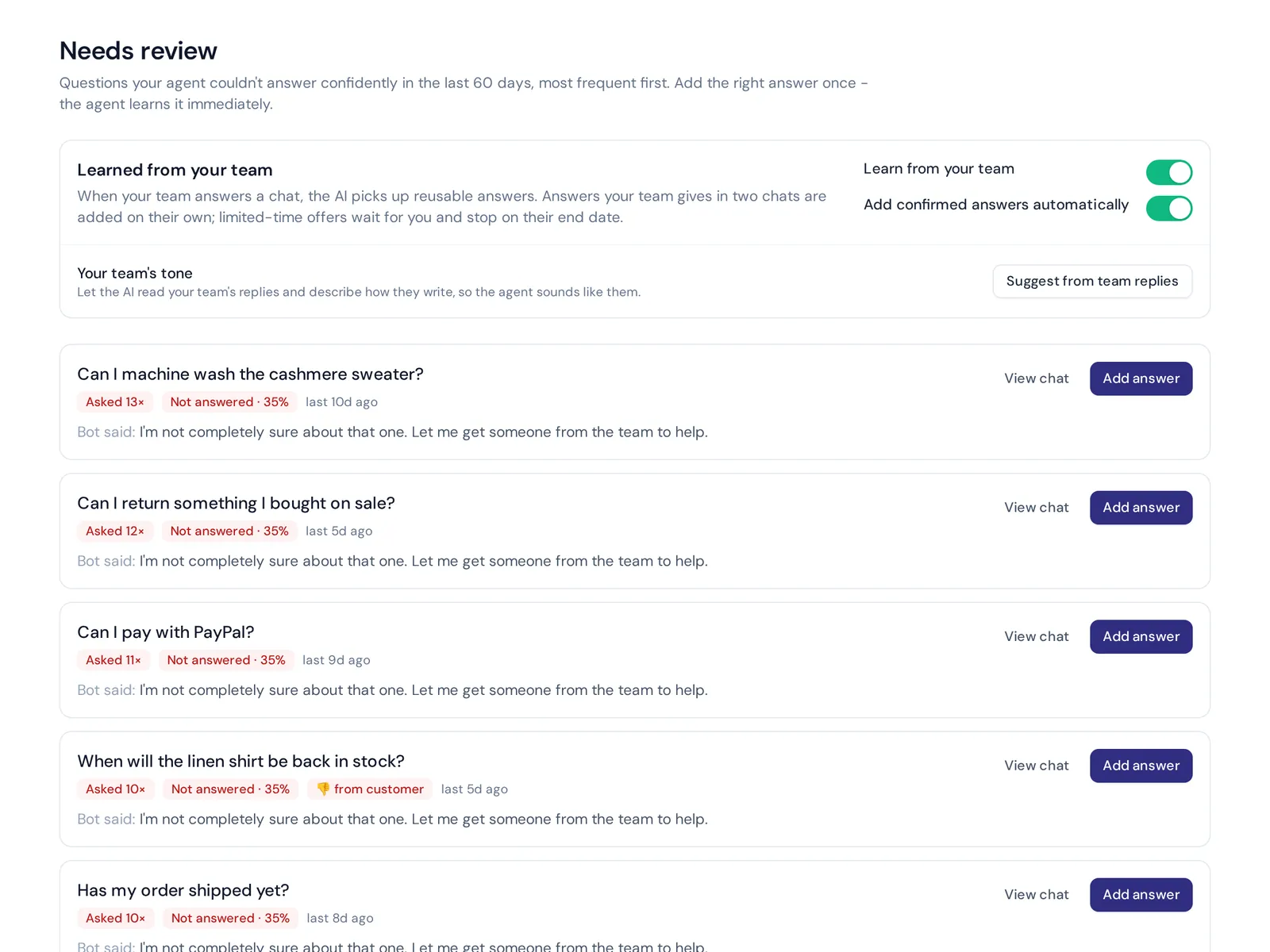
- Review weekly. Add answers for questions it missed and watch guest satisfaction.
Hotel AI in action: example guest conversations
Guest: What time is check-in? My flight lands at 10 am.
AI: Check-in starts at 2 pm. You're welcome to leave your bags with us from 10 am, and we'll message you if your room is ready earlier. Shall I note an early check-in request?
Guest: The air conditioning in room 214 isn't working and it's really hot.
AI: I'm sorry, that's not how your stay should feel. I've passed this to our maintenance team, and someone from reception will message you in a few minutes.
Notice the second one. The AI doesn't try to fix the AC. It apologizes, acts fast and hands it to people.
Benefits and honest limits of AI for hospitality
The benefits are clear: instant, consistent answers, replies in the guest's language, better operational efficiency at night and in peak season, and a better guest experience overall. But there are limits:
- It only knows what you teach it. If breakfast hours changed and nobody updated the info, it will be wrong.
- It can't replace warmth. A lost passport or an anniversary surprise needs a person.
- Integration varies. Live availability, hotel reservations and booking confirmations need a connection to your property management systems or booking engine. Many chat tools can't do that out of the box, so ask before you buy.
- Guest data needs care. Check how each vendor stores data and whether it is used to train AI models.
How AnytimeReply helps hotel teams
AnytimeReply is an AI agent for customer support with a built-in helpdesk. You add your website, documents and policies, and it answers guests day and night on your website and on WhatsApp (official Business API or quick QR connect, and it understands voice notes and photos), Messenger, Instagram and email, in the guest's language.
When a guest asks for a person, gets upset or the AI can't answer, the chat moves to your team in one shared inbox with a summary. Triggers can send complaints straight to the duty manager. Q&A answers you write always win over other sources, which is handy for deposits and cancellation rules.
Honest limits: it is a chat and messaging tool, so it does not answer phone calls or SMS. And AnytimeReply has no built-in PMS integration. On paid plans you can connect tools like Cal.com, Calendly or Airtable, or any API with an OpenAPI file, through actions. WhatsApp starts on the Hobby plan, see pricing.
Frequently asked questions (FAQs)
Do hotels use chatbots?
Yes. Hotel chatbots are common on hotel websites and WhatsApp for FAQs, pre-arrival messages, upsells and requests outside reception hours.
Can AI replace hotel customer service staff?
No. It handles repeat questions so staff can spend time with guests in person and on problems. Hospitality is still a people business.
Can voice AI handle hotel reservations?
Some voice AI tools can take phone bookings when connected to your booking system. That is a separate product category from chat tools like ours.
Is it expensive for a small hotel?
Not necessarily. Many tools have free or low-cost plans. Costs grow with message volume and integrations, so start small.
Can AI reply to guests in different languages?
Yes, and it is one of the biggest wins for hotels with international guests. Still, test the languages your guests use most.
Start small, then grow
AI works best in hospitality when it handles the routine and makes it easy to reach a real person. Start with your top questions on WhatsApp and website chat, then improve every week.
Want to try it with your own hotel's website? Start free, no card needed, train an agent on your pages and test it before any guest sees it.
Published 6 November 2026 by AnytimeReply team