A customer writes in about a late order. One agent replies in five minutes with tracking and a small apology. Another replies the next day with a copy-paste answer that doesn't mention the order at all. Same company, same policy, completely different experience. Customer service quality assurance is how you stop that from happening.
Quality assurance (QA) means regularly reviewing support conversations against clear quality standards, scoring them, and using what you find to coach people and fix processes. It isn't about catching agents out. It's about trying to ensure every customer gets the good version of your support, so the overall customer experience stays high.
This guide explains what quality customer service looks like, how to build a program step by step, a scorecard and checklist you can copy, how call center QA works, which roles do this work, and how to include AI chatbots in your reviews.
What is customer service quality assurance?
Customer service quality assurance is a repeatable process to evaluate customer interactions. Someone (a quality assurance analyst, team lead or the agents themselves) picks a sample of chats, emails, tickets or calls, scores each one against set quality criteria, and gives feedback. The aim is to ensure that quality standards are met in every customer interaction, not just the ones a manager happens to see.
It started in call centers, where supervisors listened to recorded calls. Today contact center quality assurance covers every channel: phone, live chat, email, social media and messaging apps. The quality of service should be the same wherever the customer writes.
A good quality assurance program has four parts:
- Service standards: what "good" looks like for your team.
- A scorecard: the criteria you grade every conversation against.
- Reviews: a regular habit of scoring a sample of real conversations.
- Feedback and coaching: sharing results with agents and fixing what's broken.
Why quality assurance is important in customer service
Quality assurance helps in ways that go beyond a score on a sheet:
- Consistent service. Customers get the same quality whoever answers, on any channel.
- Better coaching. Feedback based on real conversations beats vague advice like "be more friendly".
- Finds process problems. If five agents get the same thing wrong, the policy or help article is the problem, not the agents.
- Protects the brand. One rude or wrong reply screenshot can travel far.
- Explains your numbers. Reviews tell you why metrics like customer satisfaction scores go up or down.
- Increases customer loyalty. A positive customer experience brings people back. Good reviews enhance customer satisfaction and help increase customer loyalty over time.
What is quality customer service?
Before you can measure quality, your team needs to agree on it. What best defines quality customer service? Support that solves the customer's problem correctly, quickly and in a way that leaves them feeling respected. In practice, good customer service is:
- Accurate: the answer is right and follows your policy.
- Complete: the customer doesn't need to write back to get the rest.
- Timely: the reply arrives within your service levels.
- Clear: easy to read, no jargon, next steps obvious.
- Empathetic: the tone fits the situation, especially when the customer is upset.
- Consistent: the customer would get the same answer from any agent.
Write your own version of this list. These become your customer service standards and the backbone of your scorecard. Your customer service is always judged against what the customer expected, so set a standard of customer care you can actually deliver.
Quality assurance vs quality control in customer service
People often use the two terms as if they mean the same thing, but the difference is useful.
| Quality assurance | Quality control | |
|---|---|---|
| Focus | The process that produces good support | Checking individual interactions for errors |
| When | Ongoing, before and after problems | After the conversation happens |
| Goal | Prevent problems with training, clear policies and better tools | Catch and correct mistakes |
| Example | Rewriting the refund macro because agents keep misreading it | Scoring a chat where the refund was handled wrong |
Customer service quality control is one part of quality assurance. You review conversations, then use the patterns to change training and processes. Together they form your quality management system.
How to build a customer service QA program
Here is a quality assurance process that works for a three-person support team and still works for a 300-seat contact center environment.
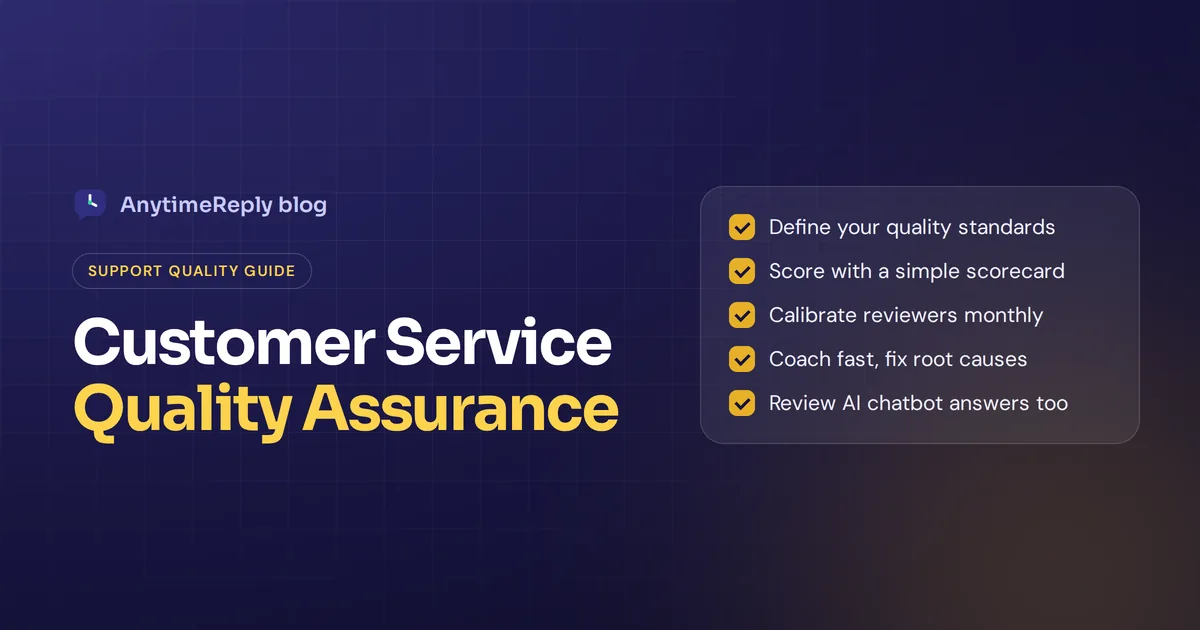
- Define your quality standards. Start with the list above. Add your brand voice and must-follow policies, like refunds, privacy and escalation.
- Build a scorecard. Pick 6 to 12 criteria, each with a clear yes/no or 1 to 5 scale. Mark a few as critical, for example sharing private data is an automatic fail.
- Decide who reviews. A dedicated QA team or quality assurance specialist in bigger operations, team leads in smaller ones. Peer reviews and self-reviews work well too.
- Choose a sample. A few conversations per agent per week is a good start. Mix random picks with targeted ones: low ratings, long chats, escalations and refunds.
- Calibrate. Have reviewers score the same five conversations and compare. If one gives 90 and another 60, your scorecard needs clearer wording.
- Give feedback quickly. Share results within a few days. Start with what went well, then one or two areas for improvement.
- Track trends. Look at average scores by criterion, agent, channel and topic every month.
- Fix the root causes. Update macros, help articles, training and policies based on what you find. Then check whether scores improve. This is how you improve service quality, not just measure it.
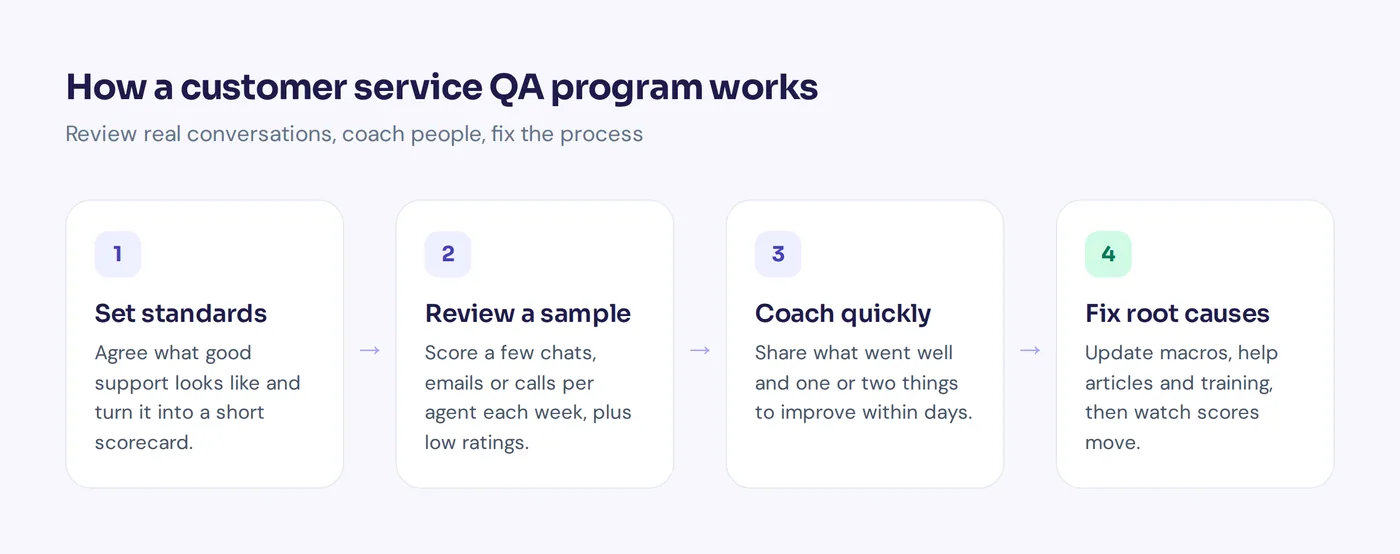
Keep the QA process simple at first. A short scorecard used every week beats a perfect one nobody has time for.
Customer service QA scorecard example
Here's a scorecard you can adapt. Score each line, then total it out of 100.
| Criterion | What to check | Points |
|---|---|---|
| Greeting and tone | Friendly, uses the customer's name, matches brand voice | 0 to 10 |
| Understanding | Identified the real problem, asked good questions if needed | 0 to 15 |
| Accuracy | Correct information, follows policy | 0 to 20 |
| Resolution | Solved the issue or set a clear next step | 0 to 20 |
| Empathy | Acknowledged frustration, apologized where it made sense | 0 to 10 |
| Clarity | Short, easy to follow, no jargon | 0 to 10 |
| Efficiency | No needless back-and-forth, used the right tools | 0 to 10 |
| Process | Tagged, noted and closed the ticket correctly | 0 to 5 |
| Critical fail | Shared private data, rude, promised something against policy | Score = 0 |
Using standardized quality criteria like these means two reviewers should land within a few points of each other. If they don't, calibrate again.
Customer service quality assurance checklist
Use these questions when reviewing any chat, email, ticket or call:
- Did we reply within our response time goal?
- Did we greet the customer and use their name?
- Did we understand what they actually needed?
- Was every fact correct (prices, dates, policies)?
- Did we verify identity before sharing account details?
- Did we solve it in this reply, or give a clear next step and time?
- Was the tone right for the customer's mood?
- Was the reply easy to read on a phone?
- Did we escalate when we should have?
- Did we tag, note and close the conversation properly?
- Would we be happy if this conversation were posted publicly?
Print it, pin it, or paste it into your review sheet. It's also a handy self-check for new agents before they hit send.
Call center QA: how call center quality assurance works
Call center quality assurance follows the same idea, with a few extras because calls are spoken, not written.
- Call recording and quality monitoring. Reviewers listen to recorded calls, or sometimes join live calls silently, to score them.
- Script and compliance checks. In banking, insurance or healthcare, agents may have to read certain statements word for word. Reviewers check they did.
- Soft skills on the phone. Tone of voice, pace, hold time and how the call center agent handles silence or interruptions.
- Agent performance coaching. Many teams play short call clips in one-to-one sessions so the agent hears exactly what went well.
In a busy call center environment, QA also ties into workforce planning. If calls run long because agents search three systems for an answer, that's a tooling problem QA can surface. An effective call center uses quality reviews to improve overall call center performance and service delivery, not just individual scores. Contact center QA works the same way across chat and email.
Chat and email QA is often easier because everything is already written down. You can scan a transcript in a minute, while a call takes as long to review as it took to happen.
Metrics to pair with QA scores
QA scores measure the quality of customer interactions. Pair them with numbers that show the bigger picture:
- CSAT: the customer's own rating after the conversation, plus written customer feedback.
- First response time: how long customers wait for the first reply.
- Resolution time: how long until the issue is solved.
- First contact resolution: solved without the customer coming back.
- Reopen rate: tickets the customer had to reopen.
- Escalation rate: how often issues go up a level.
- Sentiment: the overall customer sentiment across conversations, often tagged automatically.
Read them together. If CSAT is high but QA accuracy is low, customers may be happy today and unhappy later when the wrong answer bites. If QA is high but CSAT is low, the problem may be your policy, not your people.
Manual vs automated QA, and when to use QA software
Most teams start with a spreadsheet: one tab for the scorecard, one for results. That's fine for a small team. As you grow, manual QA hits limits. Reviewers can only read a small share of conversations, so you miss patterns.
That's when dedicated quality assurance software helps you improve customer service at scale. Tools such as MaestroQA, Playvox and Zendesk QA (formerly Klaus) let you score inside your helpdesk, run calibration and, in many cases, use AI to auto-score every conversation and flag the ones that need a human look. Check each vendor's site for current features and pricing.
Signs it's time for QA software:
- You review less than a tiny slice of conversations and still fall behind.
- Reviewers spend more time copying links than reviewing.
- You can't see trends by topic or channel without hours of work.
QA for AI chatbots
If an AI chatbot answers part of your customer support, it needs QA too. It talks to more customers than any single agent, so one wrong answer repeats hundreds of times.
- Review a sample of bot conversations with the same scorecard.
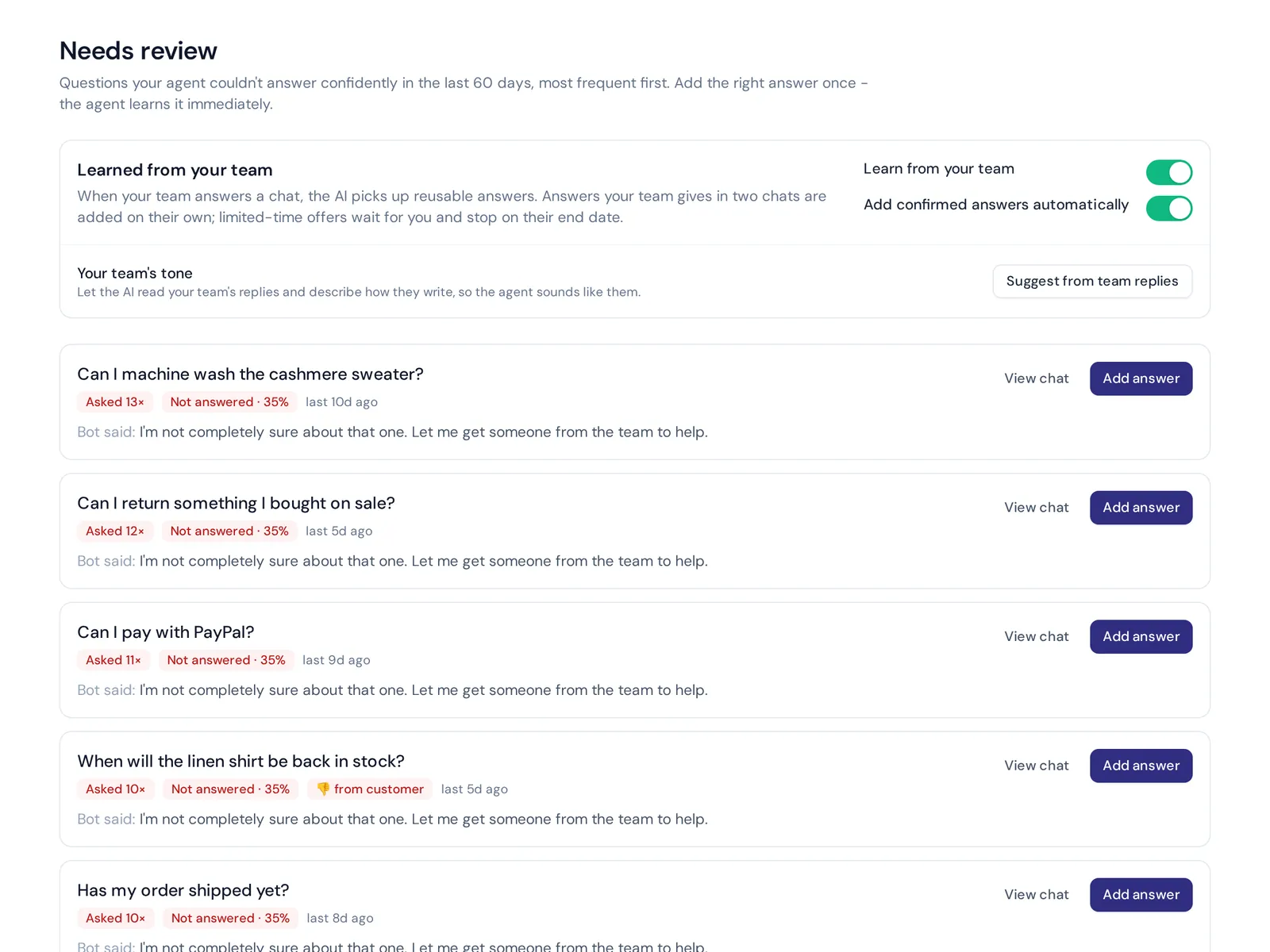
- Check unanswered questions. These are knowledge gaps. Add the missing answer once and it's fixed for everyone.
- Check handovers. Did the bot pass upset or complex chats to a person at the right time?
- Test before you change things. Write test questions with expected answers and run them after every update.
Best practices for customer service QA (and mistakes to avoid)
- Make it about learning, not punishment. If QA feels like a trap, agents hide mistakes instead of learning from them.
- Keep the scorecard short. A 40-line form takes forever and nobody remembers it.
- Don't rely only on random samples. You'll miss the conversations that matter most, like complaints and refunds.
- Calibrate monthly. Otherwise scores depend on who reviewed, and agents stop trusting them.
- Give feedback fast. Weeks later, the agent won't remember the chat.
- Let agents dispute scores. A fair appeal process builds trust in the QA program.
- Fix patterns, not just people. Coaching one agent at a time when the real fix is a better help article wastes everyone's time.
- Share wins. Post great conversations in your team channel. People copy what gets praised.
Quality assurance jobs: QA analyst, quality assurance specialist and coordinator
If you searched this topic because you're hiring, or because you want one of the many customer service quality assurance jobs out there, here are the common job titles related to customer service quality.
Quality assurance specialist
A typical job description (the "position summary" in many ads): review customer interactions across channels, score them against the scorecard, give agents feedback and report trends. The duties of a call center quality assurance specialist are similar, with more listening to calls. It's often a step up from a customer service representative role.
QA analyst
An analyst (sometimes called a contact center quality analyst) goes deeper into the data: trends by team, topic and channel, links between QA scores and CSAT, and recommendations to managers. Many call center quality assurance jobs use this title.
Quality assurance coordinator or lead
Runs the program: owns the scorecard, organizes calibration sessions, schedules reviews and works with training to build call center training programs based on QA findings.
Top skills for a quality assurance analyst
- Attention to detail: spotting the small policy slip in a long chat.
- Clear communication: giving feedback that helps, not hurts.
- Analytical thinking: turning a pile of scores into one useful insight.
Hands-on experience working in a call center or support team helps a lot, because you know what the job feels like from the other side. Familiarity with quality frameworks, helpdesk tools and spreadsheets is usually expected too. Pay varies widely by country, industry and seniority, so check current listings on job sites for your area.
Note: "quality assurance" job searches also return software testing and manufacturing roles, such as QA engineer or quality assurance inspector. Those are different jobs.
How AnytimeReply helps with support quality
AnytimeReply is an AI agent with a built-in helpdesk for chat, messaging and email, and several of its features help with quality work:
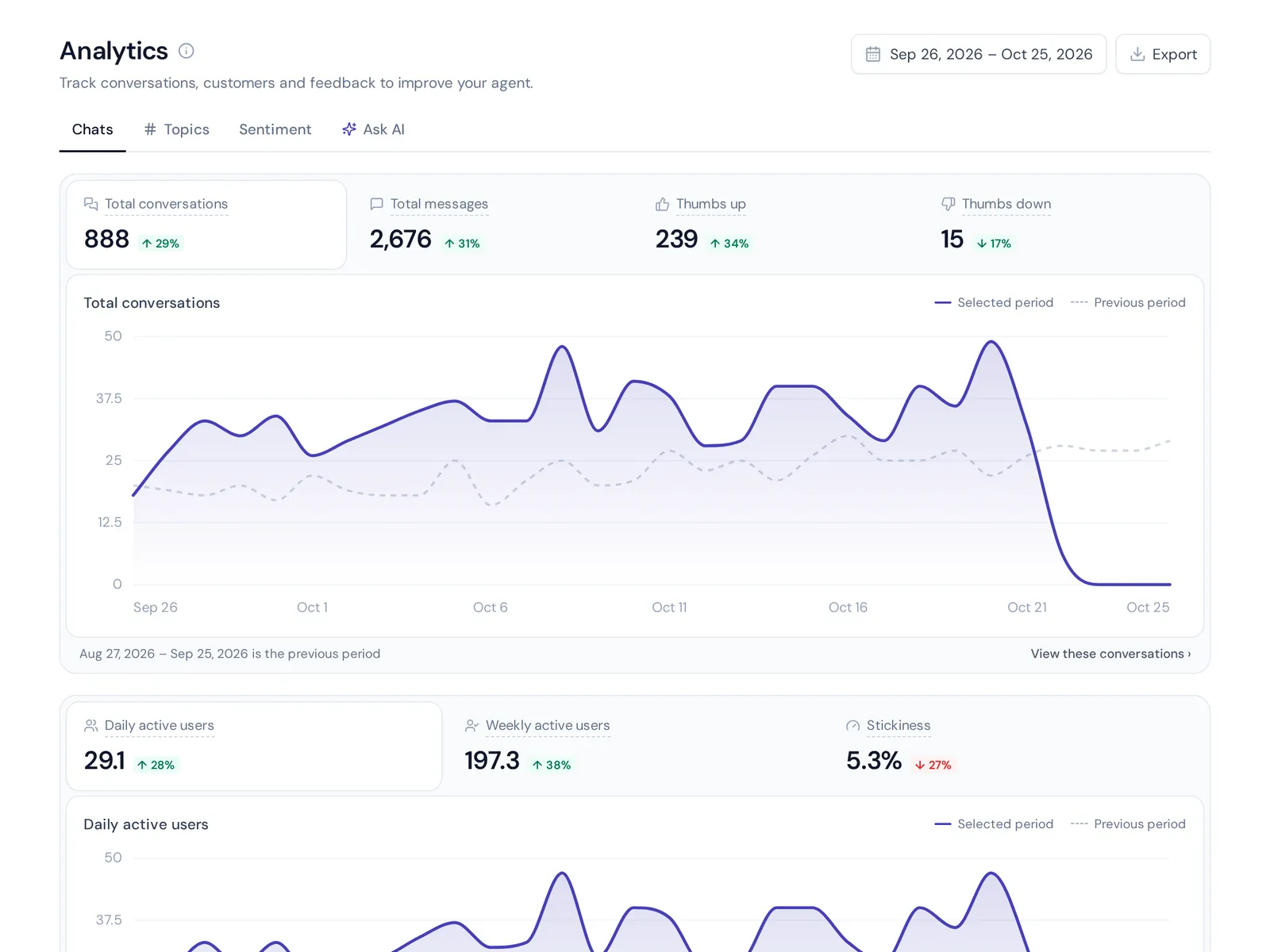
- Analytics shows topics, sentiment, CSAT ratings, team performance and knowledge gaps. You can ask your conversations a question in plain words, like "Which refund chats ended badly this week?", to pick what to review.
- Tests and Copilot run plain-language tests in a sandbox after every change, so you catch wrong AI answers before customers do. Copilot suggests fixes from real chats that you approve.
- The shared inbox has internal notes, @mentions and triggers, for example "Bad rating, email the manager".
Analytics, tests and Copilot are on the Free plan. To be clear about limits: AnytimeReply is not a dedicated QA scoring tool. There is no built-in agent scorecard, and it doesn't handle calls, so call center QA needs other software. Keep your scorecard in a spreadsheet or QA tool and use AnytimeReply to find and fix issues in chat and email.
Frequently asked questions
What does a quality assurance job do in customer service?
A specialist reviews support conversations, scores them against a scorecard, gives agents feedback, runs calibration sessions and reports trends to managers. The core responsibilities of a call center quality team are the same, plus call monitoring.
What are the 5 P's of quality assurance?
Definitions vary. A widely used version from quality management lists People, Processes, Procedures, Products and Premises. For a support team, the first three matter most: trained people, clear processes and written procedures.
How does quality assurance improve customer service?
It shows you exactly where support breaks: wrong answers, slow replies, missing help articles. Fix those and quality service becomes the norm, not the lucky exception.
How many conversations should we review?
Start with a few per agent per week, plus targeted reviews of low ratings, escalations and complaints. Increase it if you see big quality gaps.
What is the difference between QA and CSAT?
CSAT is the customer's opinion. QA is your team's review against internal standards. You need both.
Should agents review their own conversations?
Yes, self-reviews are a great habit. Pair them with reviews from a lead or peer so scores stay fair.
Start small and keep going
You don't need special software to start customer service QA. Write a short scorecard, review a handful of conversations each week, and fix the patterns you find. Quality improves one conversation at a time.
If you want AI to handle the repeat questions while you focus on quality, start free, no card needed.
Published 4 November 2026 by AnytimeReply team